The Two Legal Worlds: Immigration vs. Family Law
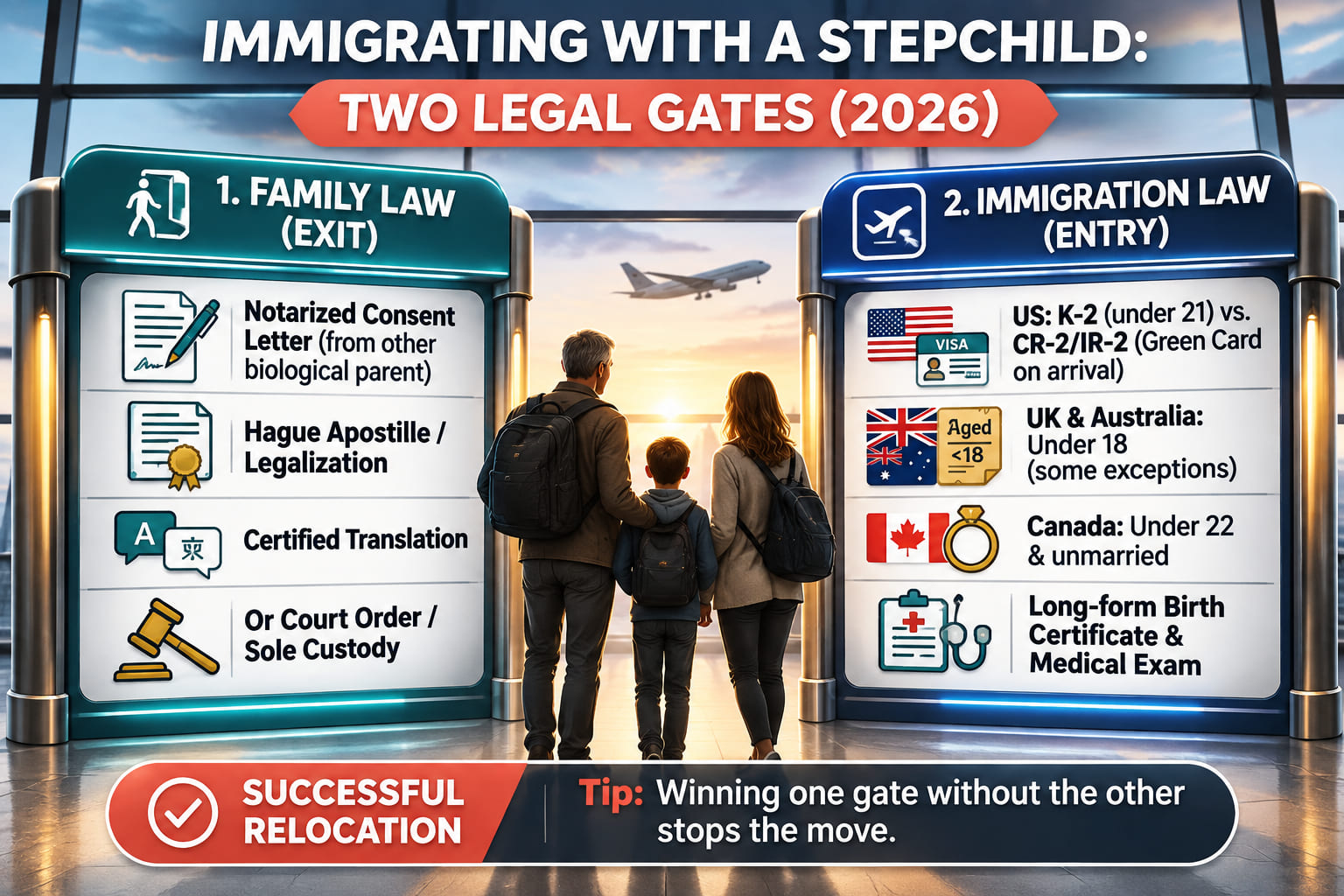
Most couples assume that if the immigration authority approves the visa, the child can move. This is a dangerous misconception. Immigration law and family law operate in two separate worlds, and both must give you permission.
Immigration law asks: Is this child eligible to enter our country as a dependent?
Family law asks: Does the other biological parent have the right to stop this child from leaving?
If you satisfy immigration but fail family law, your visa is useless. If you satisfy family law but fail immigration, you cannot cross the border. You must win both battles simultaneously.
The Biggest Hurdle: The Hague Convention & The Consent Letter
Over 100 countries are signatories to the Hague Convention on the Civil Aspects of International Child Abduction. This treaty was designed to stop parents from kidnapping children across borders. However, it also catches genuine, loving relocations in its net if the paperwork is not perfect.
If the other biological parent has any legal custody rights (which is almost always the case unless a court has stripped them), you cannot take the child out of the country without their explicit, documented permission.
The Consent Letter for Child Immigration
A simple handwritten note is not enough. A valid consent letter for child immigration must typically include:
- The full names, addresses, and passport numbers of both biological parents and the child.
- A clear statement that the non-traveling parent grants permission for the child to relocate permanently to [Destination Country].
- The signature of the non-traveling parent, notarized by a public notary.
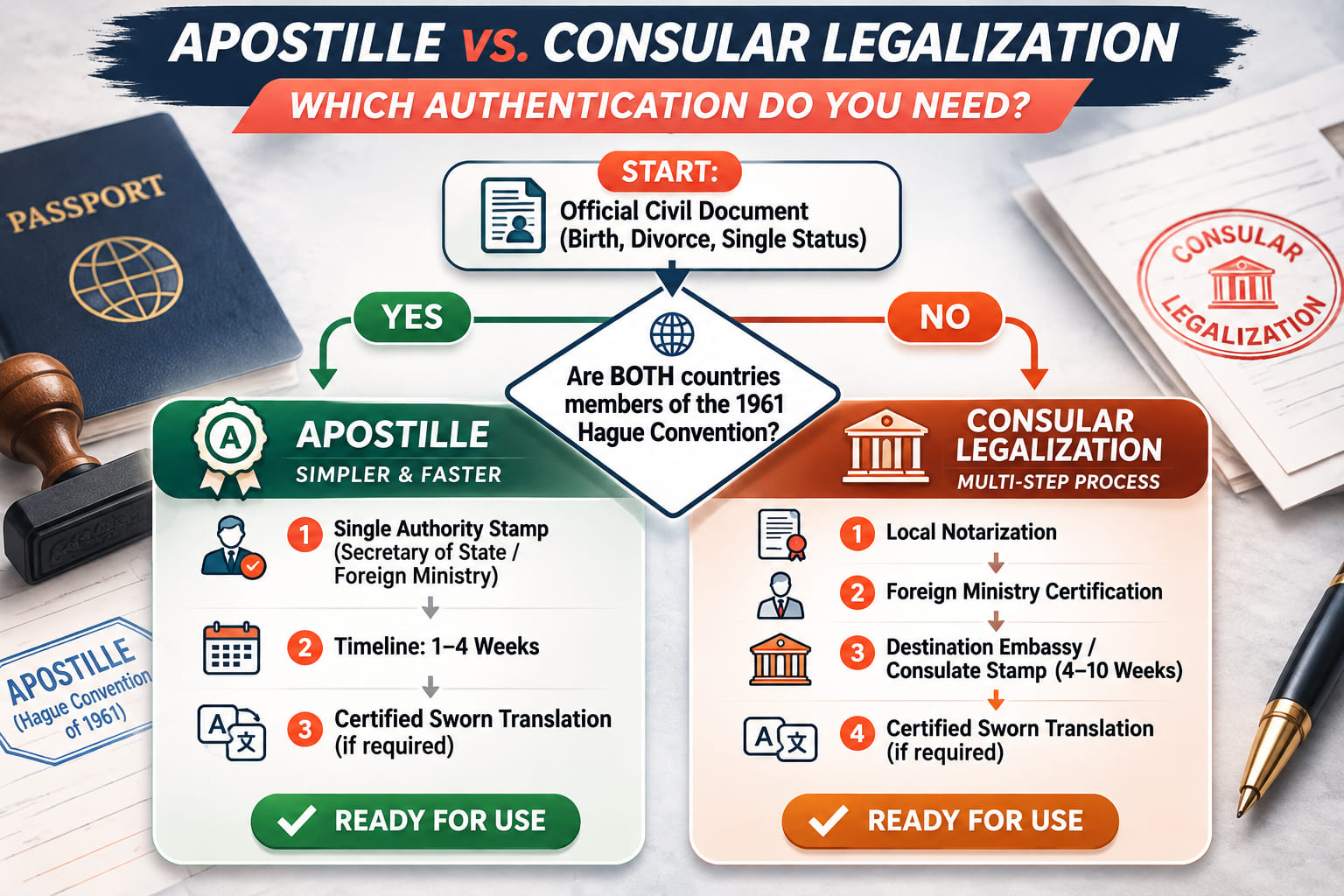
- An apostille or consular legalization, making the document valid internationally.
- A certified translation into the language of the destination country.
Immigration officers and border agents are trained to spot custody disputes.
If you arrive at the border with a child and no notarized, apostilled consent letter from the other parent, you may be denied entry — or worse, accused of international child abduction.
What If the Other Parent Refuses or Is Absent?
If the other parent refuses consent, you must go to family court in the child's home country. You will need to prove that the relocation is in the best interests of the child. This is a high legal bar and often requires a lawyer.
If the other parent is deceased, you must provide an apostilled death certificate. If the other parent has abandoned the child or their rights have been terminated, you must provide a final, apostilled court order proving sole custody or termination of parental rights.
US Visa Routes for Stepchildren: K-2 vs. CR-2/IR-2
In the United States, a "stepchild" is legally recognized only after the marriage takes place. The visa route you choose dictates how the child enters the US.
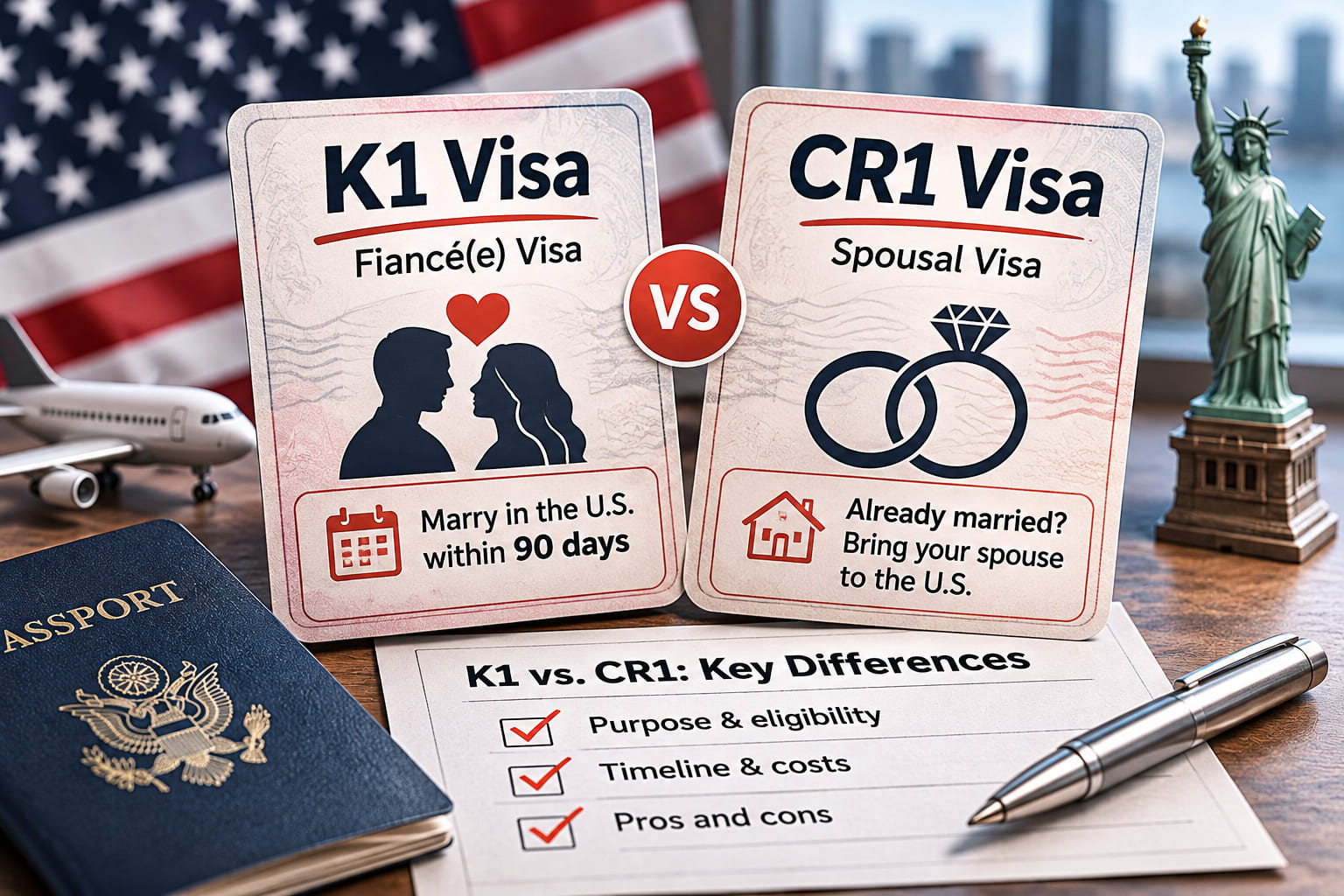
The K-2 Visa (Derivative of the K-1 Fiancé Visa)
If you are bringing your fiancée to the US on a K-1 visa, her unmarried children under the age of 21 can apply for K-2 visas. They can enter the US with her or follow to join her within one year of her entry.
Critical Rule: The child must remain unmarried and under 21 throughout the entire process. If the child turns 21 before the visa is issued, they "age out" and lose eligibility. There is very limited protection for K-2 derivatives under the Child Status Protection Act (CSPA), so timing is everything.
The CR-2 or IR-2 Visa (Derivative of the CR-1/IR-1 Spouse Visa)
If you marry your partner before filing the immigration petition, the child is classified as your stepchild immediately. They will apply for a CR-2 visa (if your marriage is less than two years old) or an IR-2 visa (if your marriage is more than two years old).
The Advantage: CR-2 and IR-2 children receive their Green Cards the moment they enter the US. They do not need to file for Adjustment of Status later. They can attend public school immediately and have full residency rights.
Age Limits in Other Major Destinations (2026)
If you are not moving to the US, the definition of a "dependent child" varies significantly. Here is the 2026 landscape for other major destinations:
| Country | Definition of Dependent Child | Key Requirements |
|---|---|---|
| United Kingdom | Under 18 years old. | Must not be living an independent life. Both parents must consent, or you must have sole custody. |
| Canada | Under 22 years old. | Must not have a spouse or common-law partner. If over 22, they must be financially dependent due to a physical or mental condition. |
| Australia | Under 18 years old. | Children aged 18–23 can be included if they are financially dependent on the sponsor and not in a de facto relationship. |
| Schengen (EU) | Varies by country (usually under 18 or 21). | Must be financially dependent and not married. Rules for stepchildren vary strictly by national law. |
Case Study: The 21st Birthday Deadline
📋 Case Study: Racing the Clock for a K-2 Visa
Paul (45, Ohio) and Iryna (32, Lviv) fell in love and decided to marry in the US. Iryna had a son, Miroslav, who was 20 years and 8 months old. They chose the K-1 route because Paul wanted to marry in his hometown. However, they quickly realized a terrifying reality: the K-1 process takes 12–15 months. By the time Iryna entered the US, Miroslav would be 21 or 22 — too old for a K-2 visa.
The Solution: They flew to Georgia (a country with a 48-hour marriage process) and married legally. Paul then filed an I-130 petition for Iryna and Miroslav as CR-1 and CR-2 derivatives. Because they were already married, Miroslav's age was "locked in" under the Child Status Protection Act for the CR-2 category. They waited 18 months for the visa, but Miroslav's eligibility was secure. "We didn't choose Georgia for a destination wedding," Paul said. "We chose it to save our son's future."
The Document Checklist for the Child
When preparing the file for a stepchild, the paperwork load doubles. In addition to the standard international marriage document checklist and apostille rules, you must provide:
- The Child's Long-Form Birth Certificate: Must list both biological parents. Must be apostilled and translated.
- The Marriage Certificate: Proving the legal step-parent relationship between the sponsor and the child's parent.
- Divorce Decree or Death Certificate: Proving the previous marriage was legally ended.
- Custody Decree: If applicable, proving who has legal custody.
- Notarized & Apostilled Consent Letter: From the non-traveling biological parent (as detailed above).
- Passport: Valid for at least 6 months beyond the intended date of entry.
- Medical Examination: Completed by an approved panel physician, including all age-appropriate vaccinations.
- Police Certificates: Required for any child over the age of 16.
Frequently Asked Questions
What if the other biological parent refuses to give consent for the child to move abroad?
If the other parent refuses, you cannot simply take the child. You must obtain a court order in the child's home country granting you sole custody or specific permission to relocate. Immigration officers will not accept a visa application without either a notarized consent letter from both parents or a valid court order.
What happens if my stepchild turns 18 or 21 during the visa process?
Age limits are strict. For US visas, the Child Status Protection Act (CSPA) may help freeze the child's age in some family-sponsored categories (like CR-2), but K-2 derivative visas generally require the child to be under 21 and unmarried at the time of entry. Always file before the child reaches the age limit.
Does a stepchild need a medical exam for immigration?
Yes. Any child applying for an immigrant visa or adjustment of status must undergo a medical examination by an authorized panel physician, just like the adult applicant. This includes required vaccinations and a tuberculosis screening.
Can I bring my partner's child if we are not yet married?
In most immigration systems, including the US, a "stepchild" relationship is only legally recognized after the marriage takes place. Before marriage, the child cannot usually be included as a derivative on a fiancé visa application unless specific legal adoption or custody conditions are met, which is rare and complex.
Conclusion: Protect the Child, Protect the Future
Moving a child across the world is not just a logistical challenge; it is a profound responsibility. The legal systems are strict because they are designed to protect children from abduction and instability. By securing the proper consent, respecting the Hague Convention, and choosing the correct visa category, you ensure that your new family can start its life together on solid legal ground. Do not cut corners with a child's paperwork — their future depends on it.