The Core Four: Documents Every Couple Needs
Regardless of whether you are filing a US K-1, a UK Partner visa, or registering a marriage in Spain, four core documents form the foundation of every international file. Missing one stops the process cold.
- Certificate of No Impediment (CNI) / Single Status Affidavit. This is the most confusing document for Westerners. It is an official declaration from your home government stating that you are legally free to marry — meaning you are not currently married to anyone else. In the US, this is often a "Single Status Affidavit" notarized at the county level. In the UK, it is a CNI issued by your local registry office. Critical rule: CNIs almost always have a strict validity window of 3 to 6 months. Order it too early, and it expires before your wedding or visa interview.
- Birth Certificates. Long-form versions are usually required, showing parents' names. Short-form "wallet" versions are routinely rejected by embassies.
- Divorce Decrees or Death Certificates. If either partner was previously married, you must prove that marriage was legally terminated. A simple "I am divorced" statement is not enough; you need the final, stamped court order.
- Valid Passports. Must be valid for at least six months beyond the date of your intended travel or application.
Legalization: Apostille vs. Consular Legalization
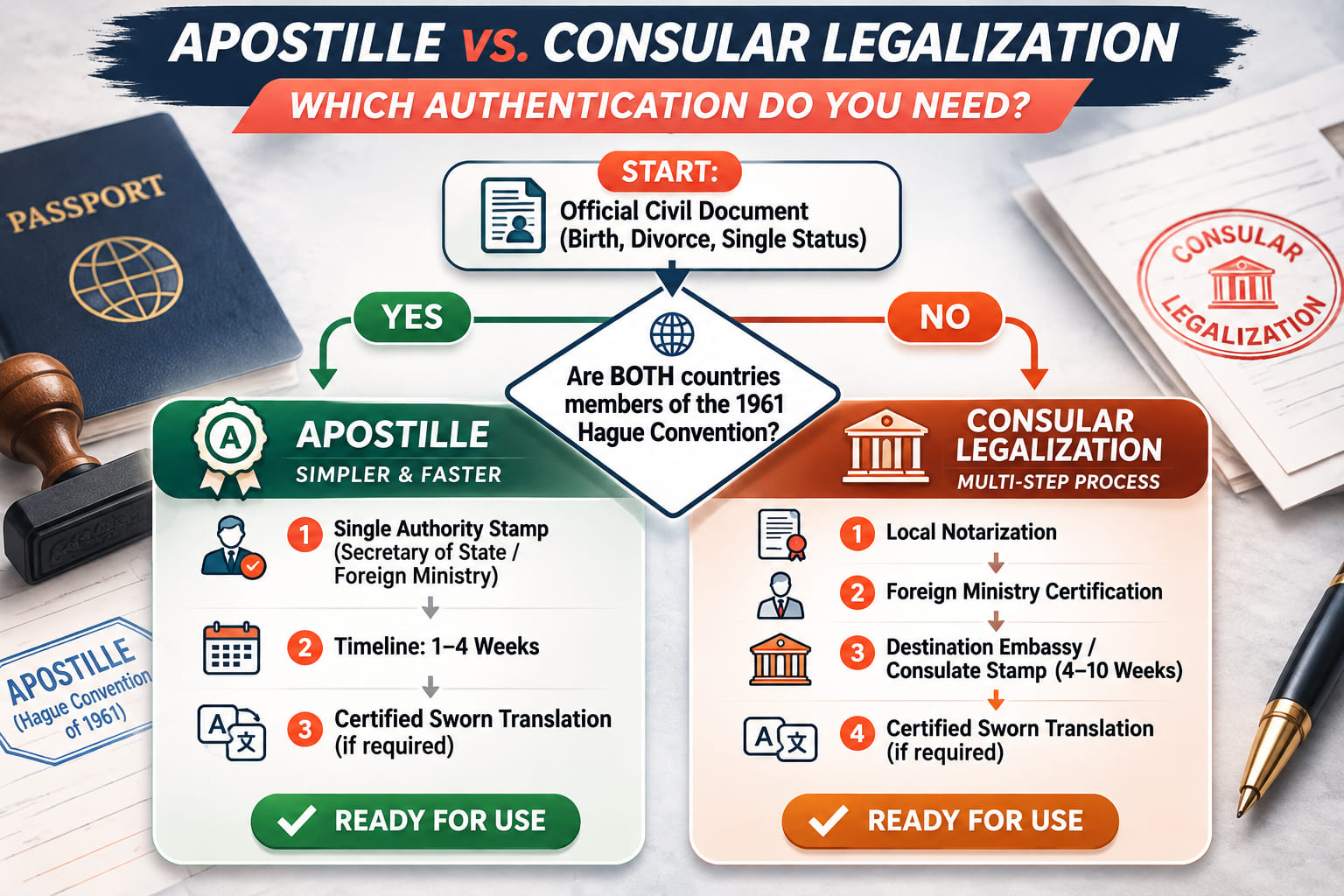
A document issued in one country is just a piece of paper in another until it is "legalized." There are two systems for this, and knowing which one applies to your country pair is the first step in the process.
The Apostille (Hague Convention)
If both the country that issued the document and the country where it will be used are members of the 1961 Hague Convention, you only need an apostille. This is a standardized certificate attached to your document by a designated authority (often the Secretary of State in the US, or the Foreign Ministry in Europe). An apostille for a marriage certificate, birth certificate, or CNI makes it legally recognizable in all other Hague member states without further embassy visits.
Consular Legalization (Non-Hague Countries)
If either country is not a Hague member (for example, the UAE, Canada for some documents, or Vietnam), you must use the longer consular legalization chain. This typically involves three steps: certification by the issuing country's Ministry of Foreign Affairs, followed by legalization at the destination country's embassy or consulate. This process can take weeks and costs significantly more than an apostille.
The jurisdiction where you marry dictates the legalization chain.
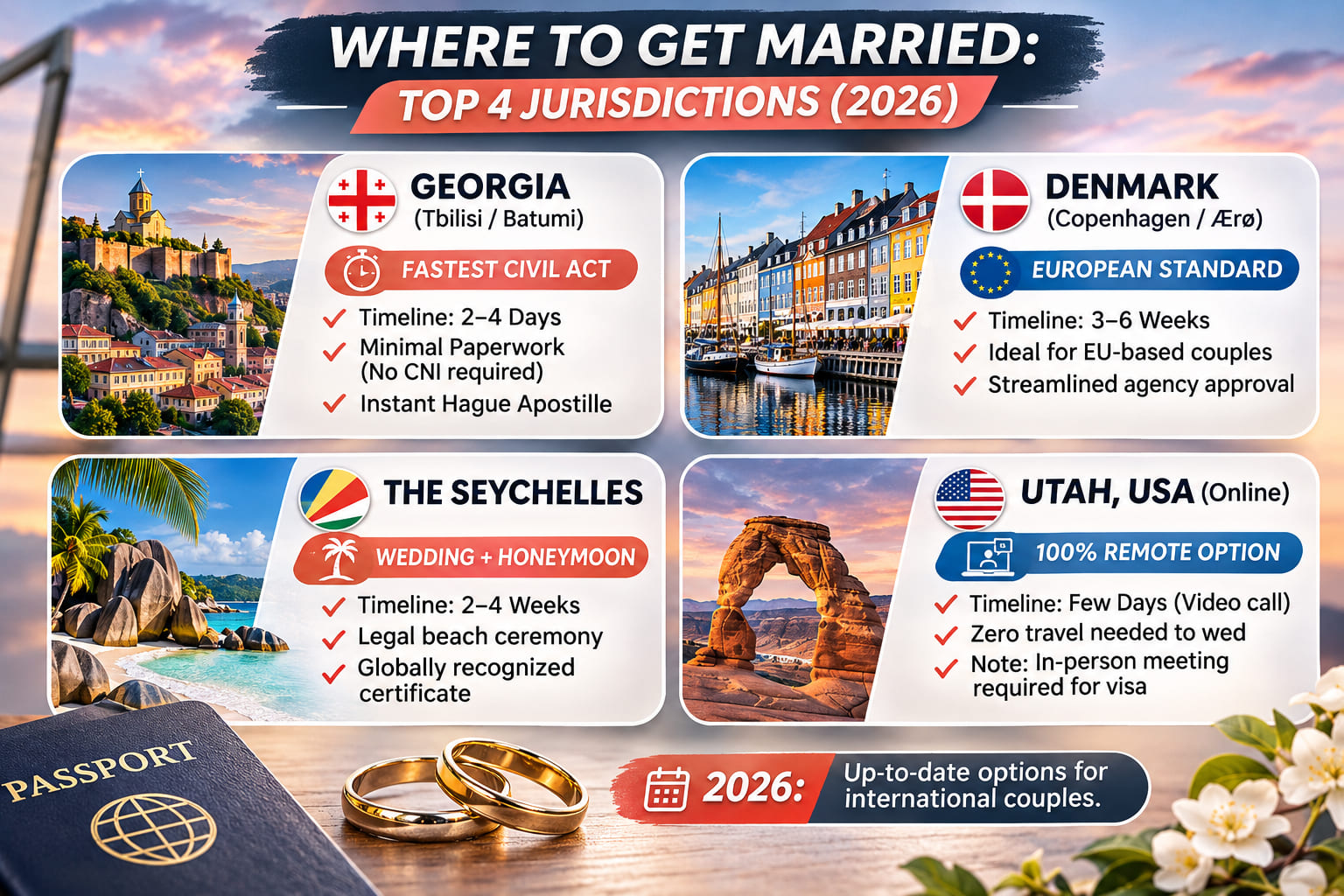
Choosing a Hague member state like Denmark or Georgia for your wedding — as detailed in our guide on the best countries for international couples to get married — often saves you from the consular legalization nightmare.
The Translation Trap: Why Certified Translators Matter
Every foreign-language document must be accompanied by a certified translation. This is where well-meaning couples make catastrophic, expensive mistakes.
Immigration authorities and civil registries do not accept Google Translate, DeepL, or translations done by the applicants themselves. They require a "sworn" or "certified" translator — a professional accredited by a government body or a recognized translation association, who stamps and signs the translation, attesting to its accuracy under penalty of perjury.
📋 Case Study: The Hyphen That Cost Four Months
David (42, London) and Oksana (31, Lviv) had their UK fiancé visa interview scheduled. Oksana's birth certificate, issued in Soviet-era Ukraine, listed her surname with a specific Cyrillic spelling. Her international passport, issued later, used a slightly different transliteration. Their translator, rushing the job, simply copied the passport spelling onto the birth certificate translation. At the visa application center, the compliance officer flagged the mismatch. The file was suspended. It took four months to obtain a corrected translation, get it re-notarized, and resubmit the file — delaying their wedding by a full season. The lesson: the translator must transliterate the name exactly as it appears on the original source document, not as it appears on the passport.
Special Cases: Children and Complex Files
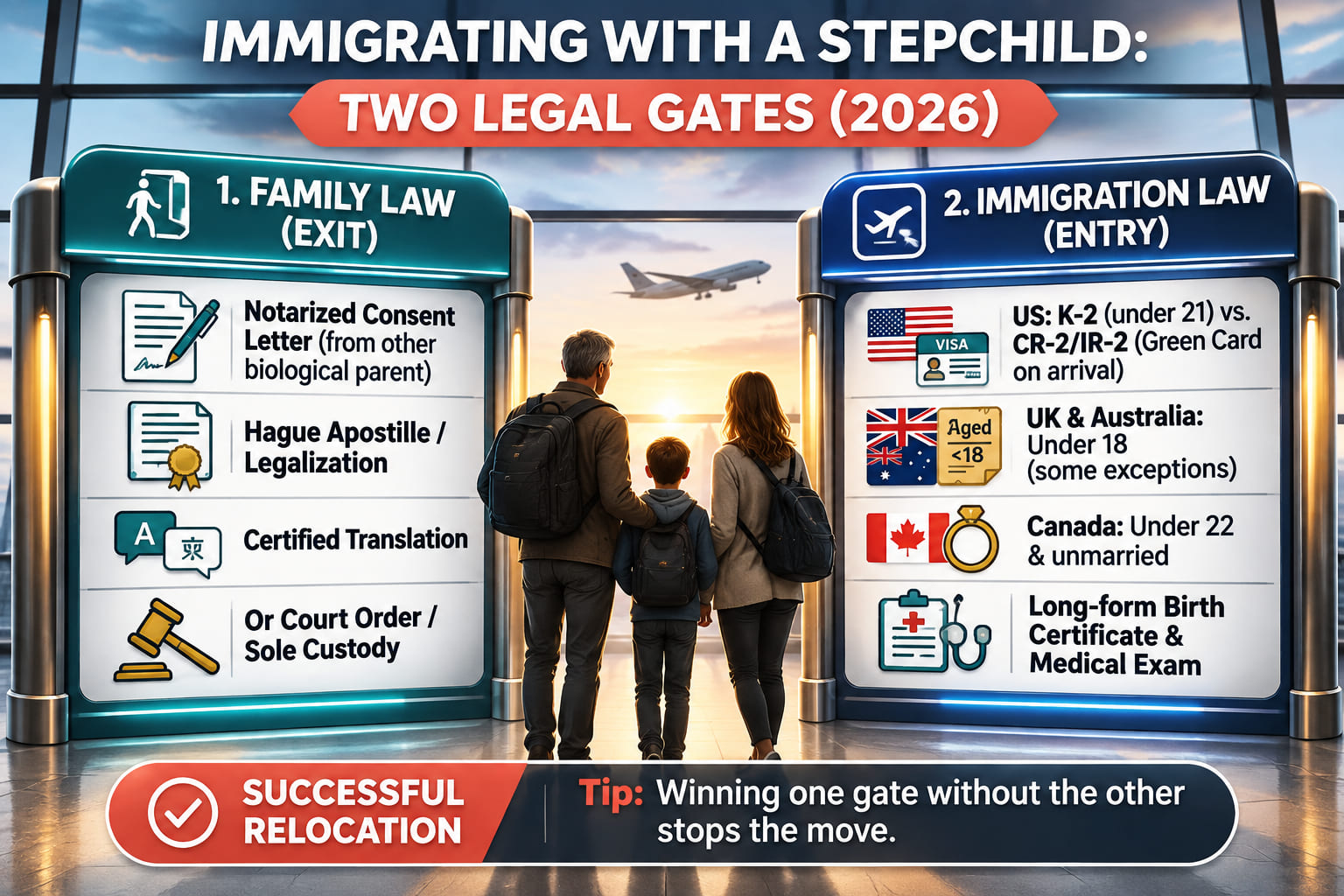
If your situation involves children from a previous relationship, the document list expands and the stakes get higher. You will need the child's birth certificate, and crucially, a notarized, apostilled consent letter from the other biological parent allowing the child to relocate internationally. Without this, your application can be flagged under the Hague Convention on International Child Abduction.
For a deep dive into the specific custody documents, age limits for derivative visas, and consent letter templates, see our dedicated guide on relocating with children from a previous marriage.
The Ultimate Timeline: When to Order What
Timing your document requests is a strategic skill. Order too early, and they expire. Order too late, and you miss your wedding or visa slot. Here is a realistic 2026 timeline for a standard international marriage file:
- 6 Months Out: Order long-form birth certificates and divorce decrees. These do not expire quickly, but obtaining them can take weeks if you are dealing with foreign archives.
- 4 Months Out: Begin the apostille or consular legalization process for the documents you already have. Apostilles can take 2-8 weeks depending on the issuing authority's backlog.
- 3 Months Out: Order the Certificate of No Impediment. This is your ticking clock. Ensure the validity window covers your planned wedding date and visa interview.
- 2 Months Out: Send all apostilled documents to your certified translator. Build in two weeks for the translation and one week for a meticulous proofread against the original documents.
- 1 Month Out: Assemble the final bundle. Check every name spelling, every date, and every stamp. This is your last chance to catch a David-and-Oksana-style error.
Frequently Asked Questions
How long is an apostille valid for a marriage certificate?
An apostille itself does not expire. However, the underlying document it certifies — like a certificate of no impediment or a police clearance — usually has a validity window of 3 to 6 months set by the receiving country. Always check the specific embassy's rules before ordering.
Can I translate my own marriage documents?
No. Immigration authorities and civil registries almost universally require certified or sworn translations performed by an accredited translator. Machine translations like Google Translate are rejected outright, and self-translations lack the required legal certification.
Do I need an apostille for a US marriage certificate?
Yes, if you plan to use a US marriage certificate abroad. You must obtain the apostille from the Secretary of State of the specific state where the marriage was registered, not from the federal government.
What if my country is not part of the Hague Apostille Convention?
You must use consular legalization instead. This involves getting your document certified by your country's Ministry of Foreign Affairs, and then having it legalized by the embassy or consulate of the destination country. It takes longer and costs more than an apostille.
Conclusion: Treat Paperwork Like a Project
The difference between a smooth international marriage process and a bureaucratic nightmare is rarely bad luck. It is almost always poor document management. Treat your paperwork like a professional project: track every certificate's issue date, verify every translator's credentials, and never assume a document from ten years ago is still valid. Do this, and your file will move through embassies and registries with the quiet efficiency that makes immigration officers smile.