This hub is the central guide of our Cross-Cultural Psychology & Daily Life cluster. If you are dating someone from another culture — or already married and feeling friction you cannot name — the six chapters below map exactly where intercultural marriage challenges appear: language beyond basic English, money and filial duty, family hierarchy, religion and holidays, relocation depression, and the unspoken household rules nobody discusses before moving in together. Each chapter links to a dedicated deep-dive, and wherever legal stakes exist — visas, prenups, work permits — we cross-reference our Legal & Immigration Hub so you never guess which guide holds the answer.
1. The Language Barrier Beyond Basic English
Basic English is perfectly sufficient for romance: dates, compliments, travel logistics, "I miss you." It is not sufficient for the three things that actually sustain a marriage — arguing, joking, and grieving. In the first year, couples discover a painful asymmetry: one partner can express nuance, irony, and hurt in their native language, while the other hears a flattened, sometimes blunt version of it.
The core problem is literal translation. When your partner says "What do you want?" instead of "What would you like?", it is often a word-for-word calque from their native grammar — not rudeness. When they answer "It is normal" to your anxious question, they may mean "don't worry, everything is fine." Misread these cues repeatedly and you build a private legend about each other's character that was never true.
There is a second, hidden layer: cognitive fatigue. Speaking a second language burns glucose and patience. During conflict, the non-native speaker often switches to their mother tongue or shuts down entirely — not to hurt you, but because their exhausted brain has no bandwidth left for conjugation.
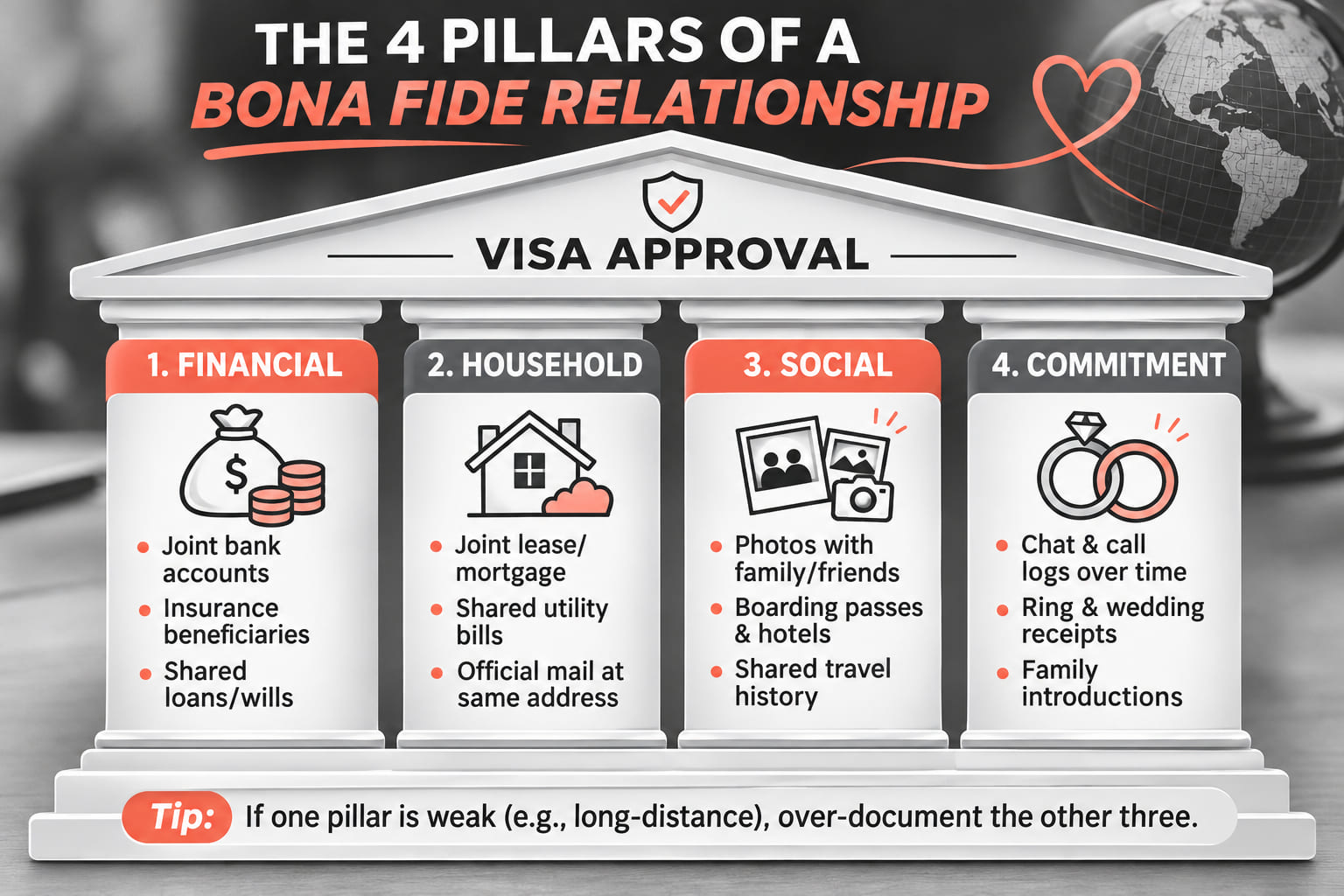
Our dedicated chapter on navigating the language barrier in relationships covers the pause rule, fair-fight vocabulary, and how to rebuild humor from zero. And a practical note: those same daily conversations — the messy, multilingual, imperfect ones — are exactly what immigration officers later review when proving a genuine relationship to immigration officers. Your intimacy and your evidence file are the same archive.
The language barrier does not disappear when her English improves. It changes shape: from vocabulary to nuance.
Couples who survive long-term learn to translate intentions, not just words.
2. Money, Chivalry, and Supporting Extended Family
Few topics ignite faster in intercultural couples than money — because money is never just money. It is a coded message about respect, love, and duty.
In much of the West, splitting the bill 50/50 signals equality and modern values. In Kyiv, Bogotá, or Manila, offering to split the check on a first date can signal the opposite: a lack of serious interest, or even an insult to the woman's dignity. Neither side is being irrational; both are reading the same gesture through different dictionaries.
The deeper fault line appears later: extended family. In the Philippines, China, Vietnam, and much of Latin America, supporting aging parents is not a burden — it is a sacred, lifelong obligation known as filial piety. A monthly remittance to her mother is as non-negotiable as rent. Western partners often experience this as a leak in the family budget; their partners experience the objection as a moral failure. Neither framing helps.
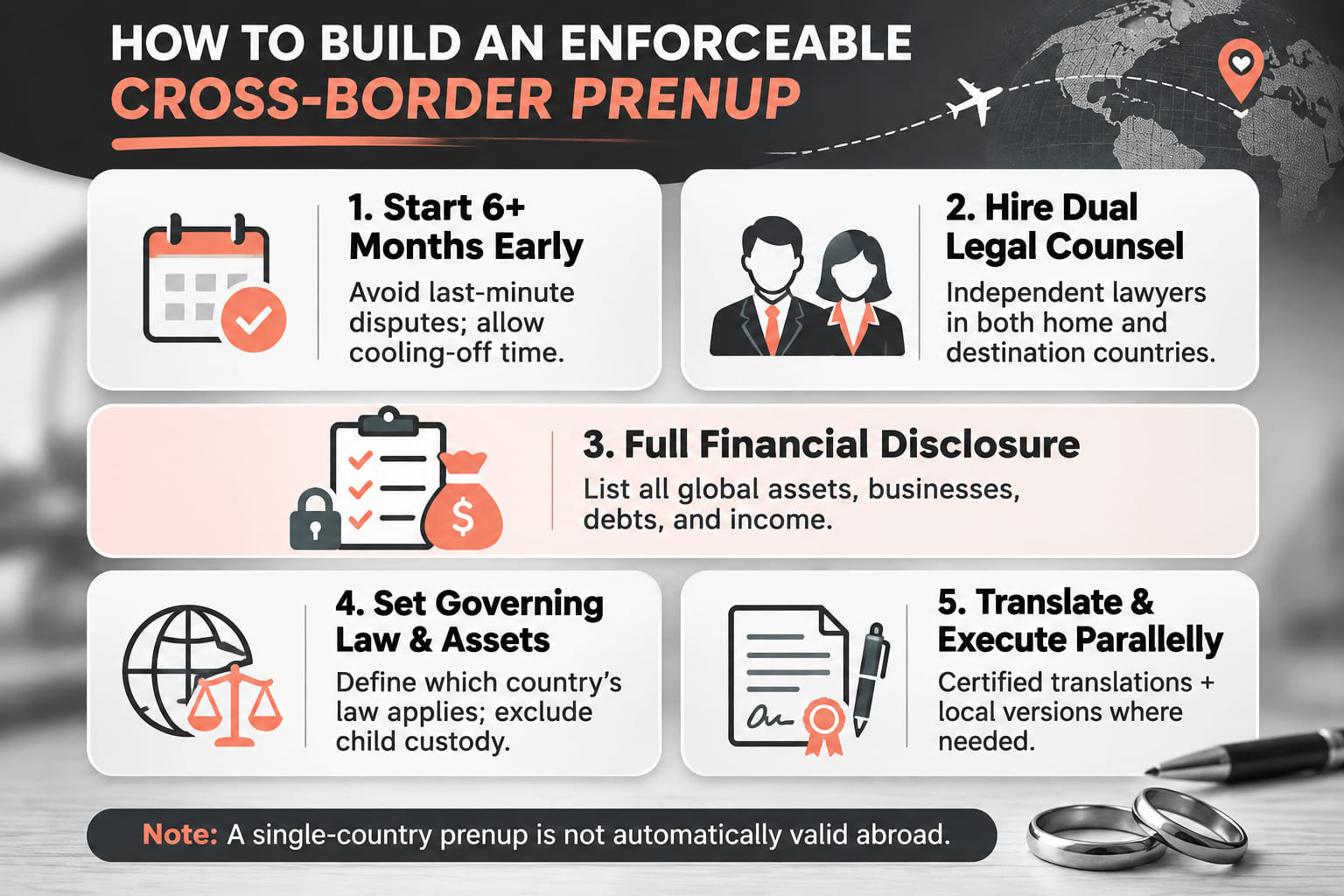
What helps is converting silence into numbers: agreed amounts, agreed frequencies, agreed endpoints. Our chapter on financial expectations in cross-cultural dating provides the regional comparison table and the exact script for "the money talk." And when assets, businesses, or children from previous marriages are involved, the legal instrument that prevents this conversation from ever becoming a courtroom battle is protecting assets with an international prenup — a document best signed while everyone still likes each other.
3. Meeting the Parents and Navigating Family Hierarchy
In individualist cultures — the US, UK, Australia, much of Northern Europe — you marry a person. In collectivist cultures — Eastern Europe, Asia, Latin America, the Mediterranean — you marry a family system. Parental approval is not a formality there; it is a gate. A mother's coldness can freeze a wedding; a father's blessing can accelerate one.
This is why the first dinner matters so much, and why its rules are invisible to outsiders: whether to bring flowers and in what number, whether to take your shoes off at the door, whether leaving food on your plate is polite or offensive, whether to toast, when to speak, how to address elders. Every one of these micro-decisions is being scored in real time by people whose opinion will shape your next twenty years.
The good news: collectivist families reward visible effort far more generously than individualist ones. A foreigner who learns three words of greeting, brings the right gift, and eats everything on his plate earns loyalty that money cannot buy. The full regional cheat sheet — Eastern Europe, Southeast Asia, Latin America — lives in our guide to etiquette for meeting your foreign partner's parents.
4. Religion, Holidays, and Raising Bilingual Kids
Two cultures means two calendars, and calendars are heavier than they look. Which Christmas counts — December 25 or January 7? Whose Easter date wins? Do you celebrate Lunar New Year, Ramadan, Diwali, or Thanksgiving — and whose family do you visit on which day? Couples who treat this as logistics fail; couples who treat it as identity succeed.
The kitchen is the second battlefield: dietary rules (halal, kosher, Lenten fasts, pork taboos), hospitality traditions (a guest must always be fed, whether he wants it or not), and the quiet politics of whose childhood dishes smell like "home."
Then come the children — the ultimate stress test: names that work in both languages, baptism or no baptism, and the home-language strategy. The evidence-backed default is "one parent, one language": each adult speaks only their native tongue to the child, while the couple's shared language remains the adults' bridge. Children raised this way do not get confused; they get fluent — provided the parents stop competing over whose culture is "default."
How to merge two sacred calendars without burning out, and the four questions to settle before engagement, are covered in our chapter on building a home in an interfaith marriage.
5. The Hidden Stress of Relocation (Culture Shock & Homesickness)
Here is the chapter no visa guide writes, and every relocated partner lives. The visa arrives, the flight lands, the welcome party ends — and around month three, something breaks. The partner who was radiant on video calls becomes quiet. She misses her mother's kitchen, her friends, her professional competence, the version of herself that did not need help ordering coffee.
Researchers and therapists call the pattern culture shock with a relocation-depression tail; couples call it "she changed." She did not. She lost, in a single year: her career credentials, her driver's license, her social circle, her language confidence, and often — thanks to work-permit waiting periods — her income and autonomy. Comfortable suburbia becomes a golden cage: safe, clean, and suffocating.
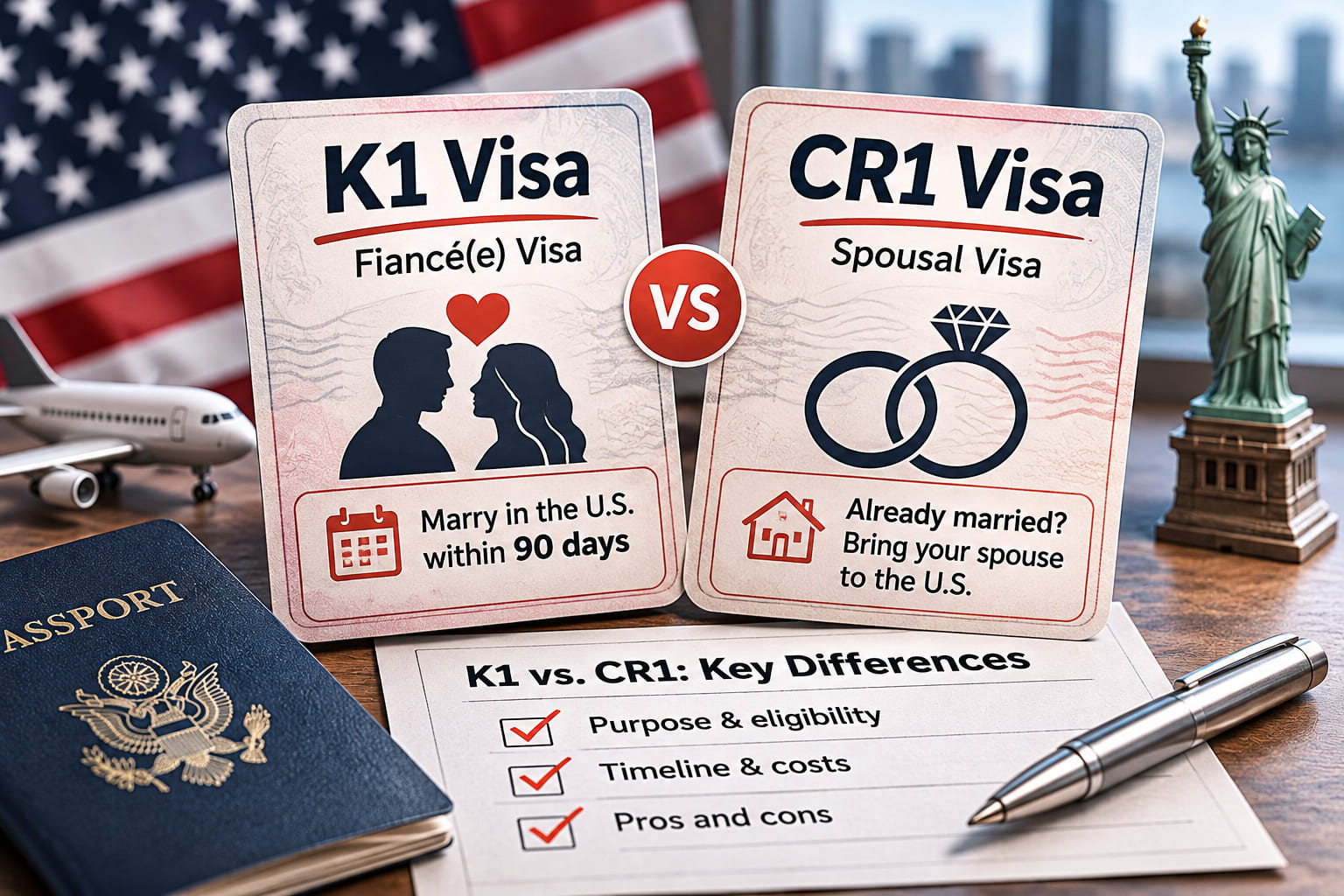
The waiting gap is not emotional, it is structural. On the US K-1 route, a new spouse cannot legally work for months after arrival while her Employment Authorization processes — a built-in dependency period that strains even strong marriages. Understanding that mechanic before you fly changes everything about how you plan the first year; our comparison of the K-1 visa work permit waiting gap versus immediate work rights on spouse visas is required reading before choosing a route.
What the local partner can do — "islands of home," community-building, patience with mood swings — and the red flags that separate normal adjustment from clinical depression are detailed in our guide to helping your partner survive relocation culture shock.
The visa gets her to your country. Only your daily behavior gets her to your life.
Plan the first post-move year with the same seriousness as the immigration file.
6. Unspoken Household Rules: Directness, Punctuality & Habits
The deepest cultural differences in relationships are not about festivals or food. They are about the invisible rulebook each of you absorbed by age seven: how directly to state a request, what "on time" means, whether shoes stay on indoors, whether relatives may visit unannounced, how loudly emotion may be expressed.
Anthropologists split cultures into low-context (say exactly what you mean: US, Germany, Netherlands) and high-context (meaning lives in tone, pause, and implication: Japan, Korea, much of Latin America, and — in family matters — the Slavic world). In a mixed couple, cross cultural communication failures are constant and tiny: her "maybe" means "no"; your "Let's grab coffee sometime" is heard as a promise, then as a lie; your smile at strangers reads to her as flirtation or insincerity; her blunt "This soup is cold" reads to you as an attack, when in her family it is simply information.
Add time perception — monochronic cultures treat 19:00 as 19:00; polychronic cultures treat it as "evening" — plus household physics like drafts, air conditioning, and street shoes, and you have a full catalogue of fights that look absurd from outside and feel existential from inside.
The way out is not compromise on every point; it is authorship. Successful intercultural couples stop asking "whose norm wins" and start writing a third culture — the rules of this specific house. How to do that, room by room, is the subject of our chapter on decoding unspoken cultural rules in daily life.
Cross-Cultural Compatibility Checklist (Before You Move In)
Most intercultural pain is preventable — if the conversation happens before the suitcases, not after the first explosion. Sit down with your partner and answer these eight questions in writing, separately, then compare. The mismatches are your real agenda:
| # | Topic | The Question to Answer Together | Why It Matters |
|---|---|---|---|
| 1 | Budget & accounts | Joint, separate, or hybrid? Who covers which categories? | Money silence is the #1 predictor of resentment in mixed-culture couples. |
| 2 | Extended family support | How much per month, to whom, until when — and who decides? | Turns filial duty from a secret leak into a planned line item. |
| 3 | Language at home | Which language for fights? For kids? For "us" time? | Prevents one partner from being permanently outnumbered linguistically. |
| 4 | Holiday calendar | Which celebrations are mandatory? Whose family for which day? | Calendar conflicts detonate precisely on the days meant to unite. |
| 5 | Work after relocation | Timeline for her career, credential recognition, permit gaps? | The golden-cage syndrome starts with an unplanned career pause. |
| 6 | Religion & rites | Ceremonies for children? How are faith milestones handled? | Decided under pressure later, it becomes a family war; decided now, a plan. |
| 7 | Guests & privacy | Rules for unannounced visits and long-stay relatives? | Collectivist hospitality vs. individualist privacy is a classic flashpoint. |
| 8 | Conflict style | Pause rules, acceptable volume, repair rituals after fights? | Arguments in a second language need pre-agreed traffic lights. |
Couples who complete this checklist report the same surprise: the conversation itself — awkward, two evenings long — resolved more future conflicts than any romantic gesture ever will.
Frequently Asked Questions
What is the biggest challenge in cross-cultural relationships?
Not love — unspoken expectations. Most friction comes from each partner assuming their own norms are simply "normal": who pays, how directly to speak, how often to visit parents, what a raised voice means. Naming these defaults out loud solves more conflicts than any amount of romance.
How do you argue when you don't share a native language?
Slow down, use simple words, and adopt a pause rule (15 minutes) before escalation. Allow each partner to vent in their native language first, then summarize together in your shared language. Written recaps after serious talks prevent "lost in translation" resentment.
Is it normal for my partner to send money to their parents every month?
In many cultures — the Philippines, Latin America, parts of Asia and Eastern Europe — supporting parents is a sacred duty called filial piety, not a burden. The healthy question is not whether it happens, but whether the amount, frequency, and duration are transparent and agreed by both partners.
How long does culture shock last after relocation?
The acute phase typically peaks between months 3 and 9 after the move, when euphoria fades and homesickness arrives. With active support — community, language practice, "islands of home" — most partners reach integration by months 12–18. Persistent hopelessness beyond that warrants professional help.
Do intercultural marriages have higher divorce rates?
Research is mixed. The extra stressors are logistical — visas, distance from family, language — not fundamental incompatibility. Couples who discuss money, family boundaries, and child-rearing expectations before moving in together perform as well as, and often better than, mono-cultural couples.
How do we raise kids in two cultures without confusing them?
Consistency beats quantity. Use the "one parent, one language" method at home, celebrate both holiday calendars, and explain each tradition's origin as your children grow. Kids handle duality well when parents treat both cultures as equal rather than competing.