What follows is the complete offline layer of international dating: how to plan the first trip to meet foreign girlfriend without losing money or trust; how both partners stay safe in a city where one of them is a guest; how an international long distance relationship survives the four-to-eight-month visa gaps; how age-gap couples handle society and consular officers; and what the whole journey actually costs from the first flight to the wedding day. Read it before you buy the ticket, not after. Every protocol below exists because some couple, somewhere, learned it the expensive way.
1. Planning the First In-Person Meeting (Logistics & Neutral Ground)
The first decision is directional: who flies? In most couples the man travels first, and the reasons are practical rather than chivalrous. Her visa options are usually narrower (Schengen or US visitor visas require ties, income proof, and weeks of processing), her work and family obligations are less flexible, and — let us name it honestly — a woman meeting a foreign man feels safer when the meeting happens on ground she knows or can leave. When both sides face visa friction, the classic alternative is neutral ground: a third country where neither of you is a host — Istanbul, Tbilisi, Warsaw, or Yerevan. Neutral territory equalizes the psychology: nobody is "the guest" in the other's life, both keep independent hotels and exit options, and the meeting stays a choice rather than an obligation.
The second decision is architectural: where each of you sleeps. Book separate accommodations for the first visit — always. After a fourteen-hour flight, forced cohabitation converts jet lag into conflict and romance into pressure. A hotel also protects her reputation in communities where a woman hosting a foreign man invites scrutiny, and protects you from the single most expensive scam pattern in the industry: the "stay at my cousin's apartment, just pay the deposit" arrangement.
The third decision is temporal: how long. Under four days feels like an interview — you meet, panic, and leave before reality starts. Over eight days amplifies small frictions and burns budget you will need for visit number two. The five-to-seven-day window is the tested sweet spot: day one low-stakes (coffee, a walk, ninety minutes), days two to five shared activity and real-life rhythm, final day the calm conversation about what happens next.
The full day-by-day itinerary template, hotel-selection rules, and the neutral-city shortlist live in our dedicated chapter on planning your first in-person meeting abroad.
The first meeting is not the reward for months of chatting.
It is the first joint project of your partnership — and projects need plans, budgets, and exit routes.
2. Mutual Safety Protocols for Both Partners
Safety conversations in international dating are usually one-sided: blogs tell men how not to get scammed and stop there. Reality is symmetric. He fears financial predation — the "guide-translator" who appears at the airport and bills $100 a day, the restaurant "recommended by her friend" with a 400% markup, the profile that evaporates after the gift transfer. She fears physical and social predation — being alone with a stranger twice her size in a city where nobody knows him, or hosting a foreigner in a community where her reputation is her family's honor. Safe international dating travel means protocols that protect both nervous systems at once.
The four rules that cover ninety percent of risk for both sides:
- Public venues for the first 48 hours. Cafés, parks, museums, family-friendly restaurants. Privacy is earned in days, not assumed at hour one.
- Independent transport and accommodation. Each partner books their own hotel and rides (Uber/Bolt, not "my friend's car"). Autonomy is the foundation of consent.
- Trusted-contact check-ins. She shares your hotel address and photo with a friend or sister; you share your itinerary and her contact with someone at home. Scheduled daily pings, not surveillance.
- Transparent money. You cover planned dates and her intercity travel as courtesy; nobody "needs" cash transfers, deposits, or emergency payments during the first meeting. Ever.
And when the meeting goes well — as planned meetings usually do — the next social milestone arrives fast in collectivist cultures: the family dinner. That event has its own etiquette and its own safety dimension (being welcomed by her family is also your strongest verification signal). Our guide to meeting her parents safely and respectfully covers gifts, table rules, and the boundaries conversation.
3. Surviving Long-Distance Between Visits (The Visa Waiting Months)
Here is the part nobody photographs: the four to eight months between visit one and visit two, stretched across seven to eleven time zones, while a visa file matures in some government queue. This is where international couples actually break — not at the airport, but on a Tuesday night when one is half-asleep and the other is half-angry and the conversation collapses into "how was your day?" for the fortieth time.
The couples who survive run three systems. First, overlap windows: instead of heroic midnight shifts, two fixed thirty-minute slots where both are awake and present — her evening, his morning — protected like meetings. Second, asynchronous intimacy: voice notes, ten-second videos of ordinary life (the market, the dog, the broken elevator), shared playlists and photo threads. Async connection carries the relationship through the hours when sync is impossible. Third, and most important, the "next ticket" rule: at every goodbye, the next visit already has a month attached. Open-ended waiting is decay; dated waiting is a plan.
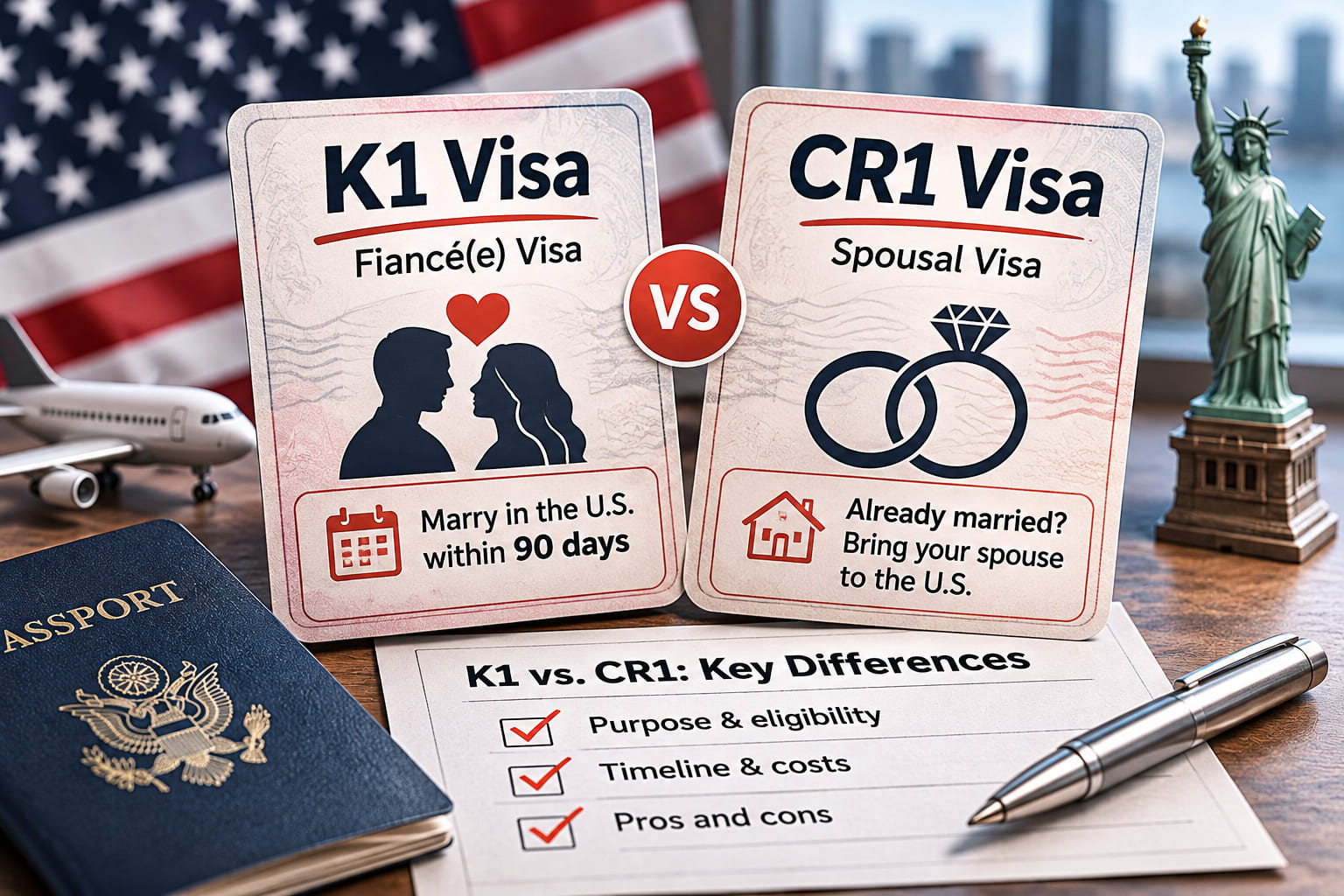
The visa pipeline itself dictates much of this calendar. Understanding the K-1 and CR-1 visa waiting timelines — including the work-permit gap after arrival — lets you schedule visits around government milestones instead of colliding with them.
The complete LDR operating system — ritual ideas, jealousy protocols, zoom-fatigue fixes — is in our chapter on surviving an international long-distance relationship across time zones.
4. Age-Gap Dynamics in International Relationships
Let us address the elephant with the same honesty as the budget: a significant share of international couples carries a ten-to-twenty-five-year age gap, and most of the discourse around it is either mockery or marketing. Neither helps a real couple. The truthful picture has three layers.
Cultural layer. Age means different things in different markets. In much of Eastern Europe, Latin America, and Asia, a man's forties and fifties read as peak reliability — established, calm, family-ready — while local twenty-five-year-olds are still considered "in progress." The gap that draws sideways glances in Ohio can be a non-issue in Medellín or Kyiv.
Relationship layer. The gap itself predicts little; the structure predicts everything. Four litmus tests separate partnership from imbalance: Does she have her own income, language path, and decision power? Can she say no — and has she? Do your two-year plans align on children, city, and money? Would the relationship survive if your wallet emptied tomorrow? Couples who answer these calmly are building a marriage; couples who cannot are building a dependency.
Institutional layer. Immigration officers do not moralize — they verify. A large gap raises scrutiny, not rejection: expect deeper questions about how you met, what you know about each other, and whether the relationship is bona fide. Documented history, consistent stories, and family introductions answer those questions better than any explanation. The exact evidence officers weigh — and the red flags for immigration officers that trigger secondary interviews — are catalogued in our legal cluster.
The full psychology, the social-script answers for friends and relatives, and the life-stage alignment worksheet are in our chapter on navigating age-gap international relationships.
5. The Real Financial Blueprint: From First Flight to Wedding
Money is the last taboo of this guide, so here it is without perfume. An international relationship from first message to wedding runs in four financial phases, and couples who budget them separately never get ambushed by them together:
- Phase 1 — Verification and connection (months 1–6): platform subscription or credits, video-call quality upgrades, small courtesies. Realistic range: $300–800.
- Phase 2 — Meetings (months 6–18): one to three trips: flights $800–1,500 each, hotels $700–1,500 per week, dining and activities $500–1,000 per trip, her intercity travel as courtesy. Realistic range: $2,500–4,500 per trip.
- Phase 3 — Wedding and legalization (months 12–24): documents, apostilles, certified translations $300–600; government petition and visa fees $1,000–1,800 depending on route; the ceremony itself, wildly variable by country.
- Phase 4 — Relocation buffer (year 2): one-way logistics, first-month deposits, and the income gap while her work authorization matures: $2,000–5,000 of honest reserve.
Total to the wedding day, most couples land between $6,000 and $12,000 across eighteen to twenty-four months — a number that stops being scary the moment it is written down and scheduled. The transparency itself is a relationship tool: couples who keep one shared spreadsheet report dramatically less resentment than couples who keep silent mental ledgers. How to have that money conversation across cultures — provider expectations, filial support, budget models — is covered in our guide to setting cross-cultural financial expectations.
Line-by-line regional budgets, the hidden costs nobody puts in the spreadsheet, and the saving strategies that are not cheapness live in our chapter on the real cost of international dating and marriage.
The Pre-Flight Readiness Checklist (10 Questions Before You Book)
Ten checks, answered honestly by both partners, before any ticket is purchased. If two or more fail, postpone the trip — not the relationship:
| # | Check | Pass Criterion |
|---|---|---|
| 1 | Unfiltered live video | At least two real-time video calls, different settings, no pre-recorded loops |
| 2 | Two-year goal alignment | Marriage, children, and relocation discussed explicitly — not assumed |
| 3 | Identity consistency | Platform verification plus a coherent social footprint matching her story |
| 4 | Independent logistics | Own hotel booked by you; own transport plan; no "cousin's apartment" offers |
| 5 | Trusted-contact network | Both partners have shared itinerary and check-in schedule with someone at home |
| 6 | Documents & insurance | Passport copies cloud-stored; travel insurance active for both |
| 7 | Duration & pacing | 5–7 days booked, with a low-stakes 90-minute plan for evening one |
| 8 | Budget reserve | Plan + 20% reserve, held separately from gifts and courtesies |
| 9 | The next-step slot | Final-day conversation about the future scheduled into the itinerary itself |
| 10 | Flexibility clause | Changeable return ticket or extension option — for both outcomes: magic or mismatch |
Frequently Asked Questions
How long should the first meeting abroad last?
Five to seven days is the sweet spot. Shorter trips feel like a job interview and leave everything unresolved; longer trips amplify small frictions and burn budget and emotional energy. A week gives you a low-stakes start, shared activities, and a calm final-day conversation about the future.
Should I stay at her apartment during the first visit?
No. Separate accommodations protect both partners: you keep autonomy and a pressure-free retreat after a long flight; she keeps privacy, reputation safety in her community, and freedom from forced intimacy. Cohabitation belongs to later visits, once trust is physical reality rather than a plan.
Who should fly first in international dating?
Usually the man — her visa constraints, work ties, and family responsibilities often make travel harder for her, and a visiting partner controls his own logistics and exit options. When both face visa friction, a neutral third country (Istanbul, Tbilisi, Warsaw) is the classic alternative that keeps the footing equal.
How do I know it is safe to meet in person?
Run a pre-flight verification protocol: at least two unfiltered live video calls in different settings, consistency between her profiles and social footprint, and platform-level ID verification. Then escalate gradually: public venues first, independent transport and hotel, trusted-contact check-ins. Safety is built in steps, not assumed.
Can a long-distance relationship survive an 8+ hour time difference?
Yes — with structure. Fixed overlap windows (30 minutes morning and evening), asynchronous micro-updates (voice notes, short life videos), shared digital rituals, and, critically, a booked next visit. Open-ended waiting is what kills long-distance relationships, not the distance itself.
Does a large age gap hurt our visa approval?
An age gap is not a disqualifying factor, but it increases scrutiny. Officers look for evidence of a bona fide relationship: shared travel, communication history, family introductions, and consistent knowledge of each other's lives. Strong documentation neutralizes most age-gap concerns entirely.
Conclusion: The Ticket Is a Contract With Reality
Buying the first flight is the moment your relationship stops being a correspondence and starts being a life. Treat that moment with the respect it deserves: verify before you fly, book separate beds, keep public places for the first two days, name the next visit before this one ends, and write the budget down together. Do these unromantic things, and something remarkably romantic becomes possible — a meeting where nothing needs to be defended, hidden, or feared, and two people who have planned everything finally get to simply be surprised by each other.